The useful part first
Key takeaways
- Shared symptoms across more than one fixture usually point toward main-line service, not a single sink or tub clog.
- Rodding can restore flow, but a cleared line is not the same as a repaired line.
- If the same blockage keeps returning, inspection or a different cleaning method may be worth asking about.
- City guidance in Elmhurst treats sanitary sewer flow and stormwater routing as separate issues.
A sewer problem usually shows itself through what the homeowner sees first: a toilet that rises after flushing, several slow drains at once, or wastewater coming back where it shouldn’t. In those situations, sewer rodding is a practical way to clear the main line and restore flow.
If wastewater is backing up, stop running water fixtures right away. Don’t keep flushing or running sinks to test it, because that can spread the backup to other drains.
Rodding is a clearing service, not a full diagnosis. It can open the line and remove the obstruction, but it does not automatically show why the blockage formed.
In Elmhurst, the next useful question is usually whether the symptom points to a shared sewer line, whether the line should be inspected after it’s opened, and whether roots or buildup are likely to return.
What you noticed usually tells you where to start
The first clue is how many fixtures are affected. A single slow sink often stays in fixture-drain territory, while a toilet that backs up when the shower runs or a basement drain that rises when laundry discharges points toward the shared sewer path. That difference matters because the work changes with the symptom.
One fixture usually means one branch line. Several fixtures at once usually mean a shared line or the main sewer needs attention.
For example, suppose the kitchen sink drains slowly, then the first-floor toilet gurgles and the basement floor drain starts to seep when the washing machine runs. That pattern does not prove the exact cause, but it does point to a broader line problem that belongs in a main-sewer conversation, not another round of plunging one fixture at a time.
- One fixture only: often a local drain issue.
- Several fixtures at once: often a shared line issue.
- Return flow at a low drain: treat it as a main-line concern.
- A repeat clog soon after clearing: ask about inspection or root-related service.
What rodding can do
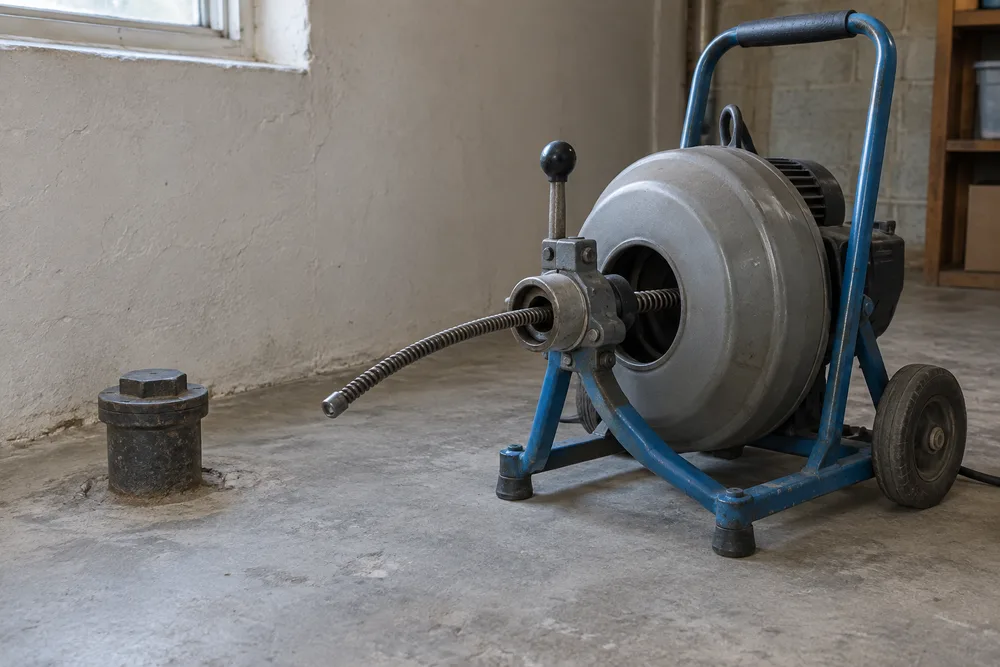
Rodding uses mechanical force to break up or pull back the obstruction so water can move again. It is often a good fit when the blockage is packed debris, a soft mass, or an accessible obstruction in the sewer line.
The immediate goal is to open the line. Once flow returns, you can decide whether a closer look inside the pipe is the next useful step.
What rodding cannot promise
A clearing visit does not guarantee the pipe is in good condition. If there is a break, offset joint, heavy buildup, or recurring root entry point, the line may clog again later. That is why cleaning and inspection are related but not identical services.
A cleared line is not the same as a fixed line. The work may solve the immediate backup while leaving the underlying condition for later evaluation.
When sewer rodding makes sense
Sewer rodding makes sense when the sewer itself seems blocked and normal use has become difficult or unsafe. That includes several slow drains together, wastewater at a low point, or a toilet flush that affects other fixtures in the home.
It also fits when you already suspect grease, roots, or built-up debris. Those materials are common reasons a line loses capacity and backs up again.
If you are still sorting out whether the issue is in one fixture or the shared line, it helps to compare the symptom pattern before booking. Drain cleaning stays focused on fixture drains, while sewer rodding addresses the larger line that serves the home.
- Book rodding when multiple drains act up together.
- Use it when a lower fixture shows return flow during another fixture’s use.
- Consider it after a recent clog if the same line clogged again.
- Choose a main-line service before assuming the problem is only under one sink or toilet.
How this differs from fixture drain cleaning
A kitchen sink, tub, shower, or toilet can clog on its own. In those cases, the fix usually stays close to the fixture. But when symptoms spread through the home, the likely problem has moved into the shared line, where main-sewer equipment is more appropriate.
Scope follows the symptom. That is why a fixture-drain visit and a sewer-rodding visit are not the same service.
Water backing up now?
Pause water use and call. Emergency calls are accepted 24/7.
What usually happens during the visit
The responding contractor will usually start by asking what you noticed, which fixtures misbehaved, and whether the problem started suddenly or built up over time. That conversation helps separate a local drain issue from a shared-line problem and shows whether an access point is available.
A sewer-rodding visit then focuses on reaching the line, clearing the blockage, and checking that flow returns through the affected drains. If the line opens but the symptoms suggest a deeper issue, you can ask whether inspection, jetting, or root-focused service makes sense next.
Do not open a pressurized or backed-up cleanout on your own. Let the contractor handle access and choose the safest starting point.
If wastewater is backing up, pause water use and do not recreate the problem. A contractor needs the line in its current condition, not another flush that pushes the backup farther into the home.
- Describe the first symptom you noticed.
- List every fixture that slowed or backed up.
- Mention whether the problem returned after a recent cleaning.
- Ask what to consider if the line clears but the symptom comes back.
A simple decision after the line opens
If the system flows normally after rodding and the symptom was isolated, the service may be enough for now. If the same line has been clogging repeatedly, inspection can help show whether roots, buildup, or a damaged section is contributing to the recurrence.
Camera inspection is useful when you want to see what the pipe looks like after cleaning rather than guessing from the symptom alone.
Elmhurst context that can matter
Elmhurst’s sewer guidance includes overhead sewer protection review, and the city notes that foundation drainage and stormwater should not be connected to sanitary sewers. That does not mean every backup has the same cause, but it does mean the source of water matters when someone is deciding how to approach the line.
Stormwater and sanitary sewage are not interchangeable problems. If water is entering where it should not, the remedy may be different from a simple clog clearing.
If you are trying to sort out whether the concern belongs to the private line or involves a public-system issue, how referrals work explains how an inquiry is routed, and the city’s current resources can help frame the drainage question before work begins.
- Sanitary backups and stormwater issues are not the same thing.
- Overhead sewer guidance matters when drainage routing is part of the discussion.
- Current city information is the right place to confirm requirements or program details.
What that means for homeowners
A sewer-rodding call should still begin with the observed symptom, not a guess about the entire drainage system. The contractor can then decide whether the blockage is likely in the private sewer line, whether additional inspection is useful, and whether the issue looks like a recurring line problem rather than a one-time clog.
How rodding compares with the next common options
Sometimes the best outcome is simply getting the line open again. Other times the clearing step is only part of the answer, especially if the same blockage keeps returning or the line appears to have a material that rebuilds quickly.
The table below gives a practical way to choose the next conversation after you notice a sewer symptom.
Common symptom patterns and the usual next move
| What you noticed | What it usually suggests | Common next step |
|---|---|---|
| One sink or tub is slow | Likely a fixture drain issue | Fixture drain cleaning |
| Several drains slow at once | Likely a shared line issue | Sewer rodding |
| Wastewater appears at a lower drain | Main-line backup is more likely | Pause water use and request urgent help |
| The line clogs again soon after cleaning | Possible roots or buildup remain | Inspection or another cleaning method |
When the next step is more than rodding
If the line backs up again soon after clearing, or if the contractor finds signs of roots, heavy buildup, or a suspect section of pipe, the next step may shift to inspection or a different cleaning method. That is especially true when the same fixtures keep acting up in the same pattern.
Recurring clogs deserve more than another reset. The point is to learn whether the line needs a different cleaning approach or a closer look inside the pipe.
Hydro jetting is often considered when residue or heavy buildup needs a stronger cleaning method, while root-focused service fits a line where roots are part of the obstruction. If you want a plain-language explanation of the method itself, the sewer rodding guide covers how it works and where it falls short.
- Repeat blockage after a recent cleaning.
- Slow return flow even after the line opens.
- Visible or suspected root intrusion.
- A pattern that keeps affecting multiple fixtures.
Why inspection sometimes follows cleaning
A camera is easier to use once the line is open because the obstruction no longer blocks visibility in the same way. That can make it easier to see whether the problem was just debris or whether the pipe also has a condition that makes another backup more likely.
Sewer service visit details explain the onsite sequence after the contractor arrives, including what a homeowner can expect from the workday itself.
How the referral works
Plumbers 911 is operated by Plumbers Local 130 and refers participating contractors who price and perform the work. The contractor who accepts the referral handles the onsite service, the inspection, and the estimate conversation for the job.
The referral gets you to the right contractor, not a promised repair outcome. The responding company will confirm what it can see, what it can clear, and what the next step should be if more work is needed.
If you want to start now, the usual path is to contact the referral network, describe the symptom, and let the contractor decide whether sewer rodding, inspection, jetting, or another service fits the situation. You can also use the contact page to send the request or call in the problem.
- The referral network routes the request to a participating contractor.
- The contractor prices and performs the work.
- The homeowner describes the symptom, not a guessed diagnosis.
- The onsite crew decides what access and tools fit the line.
What to have ready when you call
It helps to know which fixtures were affected, whether wastewater actually came back, and whether the line has been cleaned before. Those details give the contractor a clearer starting point and reduce back-and-forth when the job is being scheduled or accepted.
Questions homeowners ask
Is sewer rodding the same as sewer snaking?
Homeowners often use those terms interchangeably. In practice, it is a mechanical clearing service for a clogged sewer line, and the contractor chooses the tool setup that fits the blockage and access point.
Should I keep flushing to see if the backup clears on its own?
No. If wastewater is coming back through a drain or toilet, stop using water fixtures until the line is addressed. More water can make the backup spread to other fixtures.
Do I need a camera inspection before rodding?
Not always. If the goal is to restore flow first, rodding may happen before inspection. A camera becomes more useful when the blockage returns, the line seems damaged, or you want to see what caused the problem.
What if only the basement floor drain is involved?
A floor drain can still be part of a larger line issue, especially if other fixtures are acting up too. If it is the only symptom, the contractor will usually ask follow-up questions to see whether the problem is local or shared.
Can sewer rodding fix root problems forever?
No. Rodding can clear roots from the line, but it does not remove the conditions that let roots enter. If roots are involved, you may need inspection and a follow-up plan.
Local resources
Use these official resources for municipal or utility information. They are separate from Plumbers 911.